





 Indonesia
 日本語
日本語

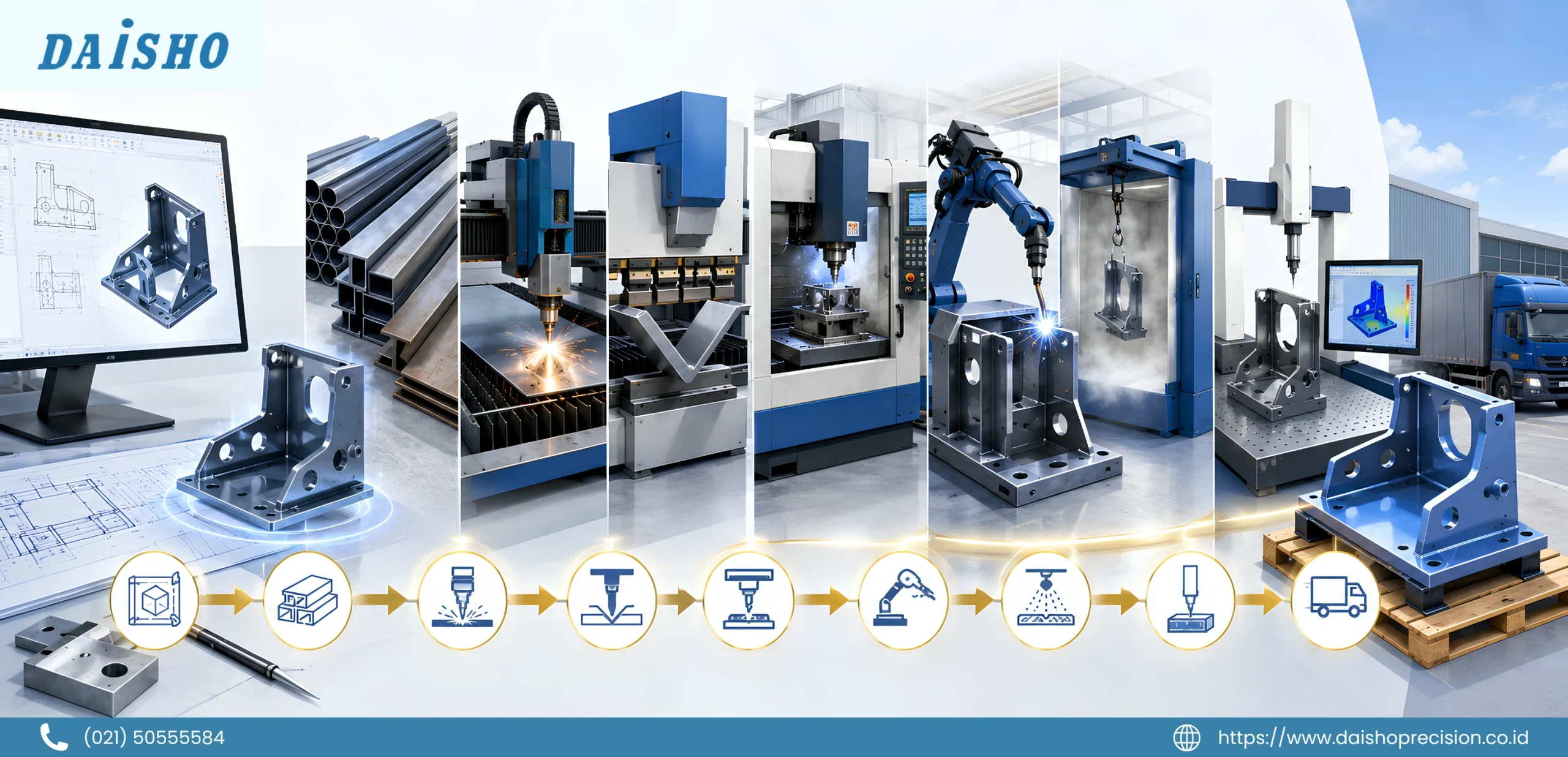
Essential Steel Processing Steps: From Engineering to Finishing & Delivery
Steel processing steps turn raw materials into fabricated components that are ready for industrial use, assembly, installation, or delivery. Depending on the drawing and project requirement, the workflow may involve engineering review, material preparation, cutting, bending, machining, assembling, welding, finishing, quality checks, and delivery preparation.
For industrial buyers, engineers, and purchasing teams, understanding the steel processing workflow helps create clearer communication from the beginning. Complete technical information, realistic production planning, and coordination between each stage can help reduce avoidable rework and support a more focused fabrication discussion.
What Does Steel Processing Include?

Steel processing is not limited to cutting material into a required size. It involves a connected workflow in which each stage affects the next one.
For example, inaccurate cutting may affect bending alignment or fit-up. Poor fit-up can create additional challenges during welding. Surface conditions may also affect finishing, painting, or coating preparation. Because of this, steel processing steps should be reviewed as a connected workflow rather than as separate tasks.
The exact sequence may vary based on material type, thickness, component geometry, dimensional tolerance, welding details, machining requirements, finishing needs, and target delivery schedule.
1. Engineering Review and Process Planning
Engineering review is the starting point for a more controlled fabrication process. Before production begins, drawings and technical references should be reviewed to understand component dimensions, material requirements, hole positions, tolerances, weld details, surface treatment, and handling considerations.
This stage also helps determine the most suitable production sequence. Certain components may require machining before welding, while others may need machining after welding or finishing. Planning the sequence early helps production teams identify possible constraints before materials move through the workshop.
For customers, providing clear drawings, material specifications, estimated quantities, and delivery expectations can support a more productive project review.
2. Material Preparation
Material preparation involves confirming the required material type, size, thickness, and condition before fabrication begins. Steel plates, structural profiles, tubes, bars, or other materials should be prepared according to the component drawing and production plan.
Material condition is important because rust, oil, surface contamination, damage, or incorrect dimensions may affect later operations. A cleaner and more suitable starting material supports more consistent cutting, forming, welding, and finishing results.
At this stage, production teams may also prepare material identification, handling arrangements, and cutting plans based on the planned fabrication sequence.
3. Cutting Steel Material
Cutting prepares steel material according to the required length, shape, profile, hole pattern, or component outline. Depending on the project, cutting may involve plate cutting, profile cutting, drilling, or other material preparation methods.
Cutting accuracy matters because variation at this stage may affect the fit of the part during bending, machining, assembling, or welding. Clear dimensions, suitable cutting methods, and proper material positioning can help support more reliable downstream processing.
Important cutting considerations may include:
- Material thickness and grade
- Required dimensions and profiles
- Hole positions or openings
- Edge condition
- Tolerance requirements
- Production quantity
- Next-stage fabrication needs
4. Bending and Forming
Bending changes the shape of steel material to create angles, channels, brackets, frames, supports, and formed components. This process is commonly used when a flat material needs to meet a specific structural or functional design.
Bending requirements should be reviewed based on material thickness, bend angle, bend radius, component geometry, and tolerance requirement. Incorrect bending angles or inconsistent dimensions may create fit-up issues during assembling and welding.
Since bent components often continue to machining, welding, or finishing, coordination between these stages is important. Proper planning helps ensure that the part remains suitable for the next process.
5. Machining for Precision Features
Machining is used when a steel component requires more precise holes, slots, surfaces, threads, mounting points, or dimensional features. Common machining activities may include drilling, milling, tapping, boring, facing, or controlled material removal.
Not every steel component requires machining. However, machining becomes important when the drawing includes tighter tolerances or critical functional features.
The production sequence should also be considered carefully. In some cases, machining may be completed before welding. In other cases, it may be more suitable after welding and distortion control have been reviewed. The best sequence depends on the component design and project requirement.
6. Assembling and Welding
Assembling and welding bring individual steel parts together into a fabricated component or structure. Before welding begins, fit-up should be reviewed to confirm that parts are positioned correctly according to the drawing and fabrication requirement.
Welding quality can be influenced by joint preparation, material condition, welding parameters, consumables, welding position, heat input, and inspection practices. Accurate cutting, suitable bending, and proper fit-up all contribute to a more controlled welding process.
For further reading, explore articles about common welding defects in steel fabrication and practical methods to reduce avoidable welding issues.
7. Finishing, Sandblasting, and Painting
Finishing prepares fabricated components for their intended application, further assembly, coating, storage, or delivery. Depending on the requirement, finishing may include grinding, edge preparation, surface cleaning, sandblasting, painting, or protective coating work.
Sandblasting can be used to remove surface contamination, rust, old coating, or mill scale before coating preparation. A cleaner surface may help support better painting or coating application.
Painting requirements can vary based on project specifications, environmental conditions, corrosion protection needs, appearance expectations, and handling requirements. Surface preparation and proper coordination before coating are important because finishing is often one of the final visible stages before delivery.
8. Quality Checks and Delivery Preparation
Quality control should take place throughout the steel processing steps, not only after the component is complete. Review points may include material verification, dimensional checks, fit-up inspection, visual weld inspection, surface condition review, finishing checks, and delivery preparation.
Early checks can help identify issues before a component moves to the next process. This may be more efficient than discovering a dimensional, welding, or surface issue after machining, painting, assembly, packaging, or transport arrangements have already progressed.
Before delivery, the component may require final inspection, labeling, protection, packing, handling preparation, and coordination with the planned delivery schedule.
For a broader discussion about production quality and avoidable rework, read our article on steel fabrication rejects and how to reduce them.
What Should Customers Prepare Before Starting a Steel Processing Project?
A more complete project brief can help manufacturing teams understand the actual requirement earlier. Before requesting a quotation or production review, buyers should prepare:
- Technical drawings or reference sketches
- Material type and thickness
- Required quantity
- Dimensions and tolerance requirements
- Welding or assembly requirements
- Machining features, holes, or threads
- Finishing, painting, or coating needs
- Target delivery schedule
- Delivery location or handling considerations
Clear information supports more productive communication between purchasing, engineering, production, quality control, and logistics teams.
Essential Steel Processing Steps Support Better Project Planning
The essential steel processing steps begin with clear engineering preparation and continue through material preparation, cutting, bending, machining, welding, finishing, quality control, and delivery readiness.
When each stage is planned as part of one connected workflow, project teams can better understand the relationship between drawings, materials, production requirements, inspection needs, and delivery expectations.
Explore our Our Operations page to understand the manufacturing stages available at PT. Daisho Precision. When your drawings, material specifications, estimated quantities, required processes, and delivery target are ready, discuss your project requirement with our team and do not hesitate to contact us.